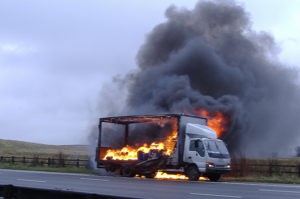
A backdraft fire occurs when the fire ceases to burn freely due to a lack of oxygen in the atmospheric air within the fire building.
The three primary components of any fire are oxygen, ambient heat, and an ignition source. A backdraft fire occurs when the fire ceases to burn freely due to a lack of oxygen in the atmospheric air within the fire building. Unfortunately, this condition can be hazardous for anyone, including firefighters. Keep reading to understand more about this fire phenomenon.
What Happens in a Backdraft Fire?
Again, a backdraft fire is an unexpected explosion triggered by new oxygen entering a fire’s circle. Once a fire has consumed all the available oxygen, it will begin to decline. However, the presence of heat remains even if you don’t see any roaring flames.
Fires produce smoke, which consists of carbon and soot. The different colors of smoke are based on the amount of oxygen a fire can consume. Additionally, smoke always rises and hardens. Because of its density, it’s challenging to see through the smoke. Unfortunately, the smoke can be so hot that it can cause another fire. Remember, strange brown discolorations, warping, and cracking on windows and doors indicate a backdraft fire is possible.
How Can Fire Responders Help?
Fires are often defined as volatile and will do anything to sustain themselves and survive. Ventilation through so-called vertical openings is the only choice for responders to implement. For instance, venting the heat and pressure through the roof can help make entering a room or building safer during a fire emergency.
This is when firefighters and other responders can begin extinguishing the fire. Although extinguishing the heat through a window or door may make sense, it’s certainly the quickest way to trigger a backdraft fire. It’s significant to note that energy-efficient buildings with outstanding insulation and sealed windows can also experience a backdraft fire.
Signs of a Backdraft Fire
- Sudden, quick movement of air and smoke going inside when an opening is made
- There is little or no visible flame
- A well-sealed property might indicate excessive heat accumulation
- Black smoke becomes dense and yellow without evident flames
- You notice smoke-stained windows with visible cracking or rattling
- The smoke leaves the structure in puffs and returns. Additionally, the fire seeks oxygen, which appears as smoke pulling in through cracks or under doors.
Thorough and regular inspections of your fire safety equipment can make a difference between life and death in the case of an emergency. Contact Judd Fire Protection at 410-871-3480 for an inspection. We serve clients in Maryland, including Baltimore and Westminster, as well as Northern Virginia, West Virginia, Delaware, and Pennsylvania.
Commercial and Residential Fire Prevention from Judd Fire Protection
If you want to ensure your home and business are safe throughout the year, trust Judd Fire Protection, LLC. We have over two decades of experience designing, installing, inspecting, and repairing residential and commercial fire protection systems. We serve clients throughout Maryland, Washington, D.C., Virginia, and West Virginia. If you are interested in finding out more about our services and protecting your home and business, call Judd Fire Protection at 410-871-3480. Follow us on Facebook, X, and Pinterest.